

Those who follow me know that every week I renew my microgreens stock at Farmer’s Market. I usually consume them frequently in my daily life, I really like the flavor, the texture, the appearance and not to mention that they are very rich! In this post I will explain what microgreens are, what are the benefits related to their consumption, how to add them in our daily lives and how we can produce them at home.
What are microgreens?
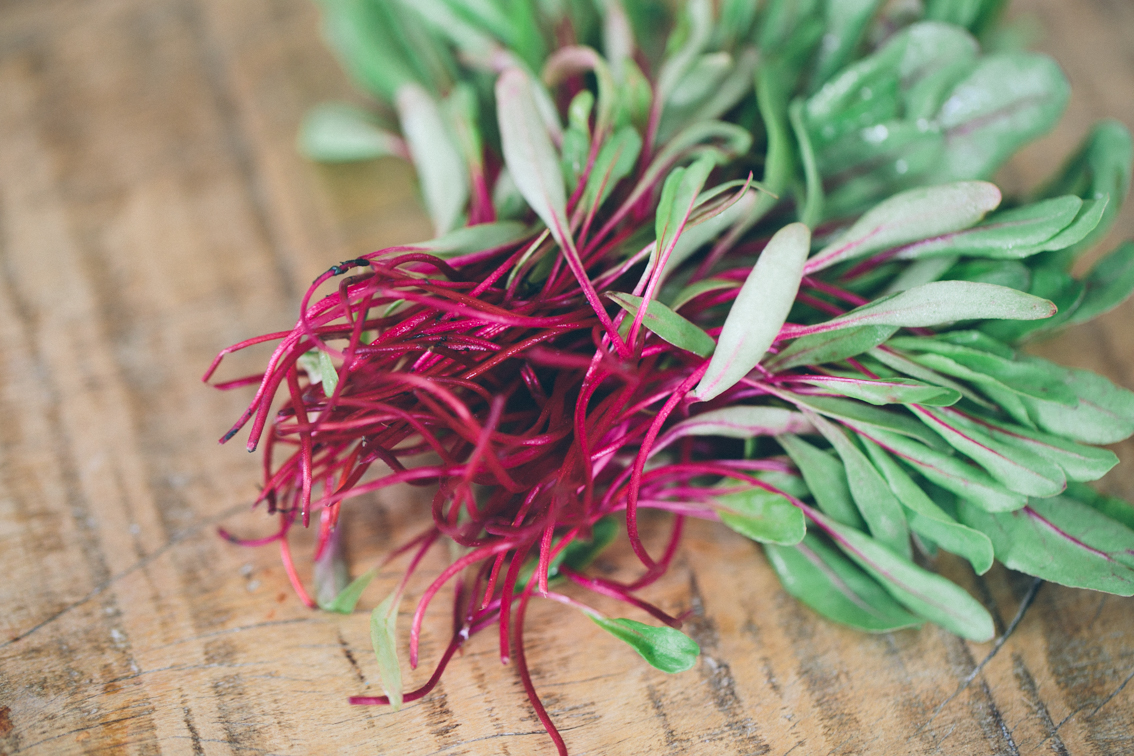
The microgreens They are much smaller versions already developed of the plants (vegetables, aromatic herbs and vegetables), ranging from 5 to 10 centimeters from the root, and therefore its name. That is, it is a vegetable that is ready, it just needs to grow. Among the various existing types of microgreens, the most common are: amaranth, basil, beet, cabbage, celery, coriander, chia, watercress, fennel, cabbage, mustard, parsley and radish. At first it may be easy to confuse them with the buds (germinated), but the main differences between them are:
- Microgreens are grown in soil and the shoots can be germinated with water addition. In addition, microgreens need sunlight to develop.
- The buds are the first phase of the plant’s development, while the microgreens represent the second phase of development, where the plant is already formed and only needs to grow.
- When we ingest the buds, we are consuming the seeds, roots, stems and leaves of the vegetable. With microgreens, the root is not ingested.
The search and use of microgreens initially was much more an aesthetic and visual issue than a functional one. That’s because their delicate appearance and vibrant colors attract a lot of attention and give a super special touch to the dishes. These characteristics caught a lot of attention from the chefs, who began to add them to decorate and finish their plates.
benefits of microgreens
Its consumption has been widespread mainly after studies show that the nutritional value of plants at a young age is significantly higher compared to vegetables in adulthood.. was observed that microgreens contain a greater concentration of bioactive components, such as: vitamins, minerals and antioxidants. As we know that these elements are crucial for us, their consumption is a great ally for the promotion and maintenance of our health.
A study Analyzing groups of vitamins (including vitamin C, and beta-carotene) and other phytochemicals, it showed that the leaves of almost all microgreens had 4 to 6 times more nutrients than from the mature leaves of the same plant. A variation was also observed between the amount of vitamin C in some vegetables, where, for example, purple cabbage led the ranking, presenting a higher concentration of vitamins compared to other vegetables. Among the 25 microgreens studied, red cabbage, coriander, amaranth and radish had respectively the highest concentrations of ascorbic acids, carotenoids, phyloquinone and tocopherols.
how to consume
The most common way to consume microgreens is in salads combined with other leaves and vegetables, it is delicious and gives another face to the salad. I love putting them on sandwiches, in addition to giving an incredible flavor, it leaves the dish looking wonderful! It also works well as a topping in soups or toast.
For those people who are not in the habit or even don’t like to consume salad that much, microgreens are a great option to switch with the other leaves (lettuce, arugula, watercress..etc), since in a small amount the supply of nutrients is surprisingly greater. I usually recommend consumption for my patients who are vegetarians or vegans, these greens have several enzymes and many nutrients, making meals much more dense nutritionally. And those who already like and eat salad often, adding microgreens will bring new colors to the dish, an incredible texture, a more intense flavor and not to mention the positive impact on the supply of nutrients.
Where to find / how to produce at home
Microgreens can be purchased ready for consumption at organic fairs, farmers market (for those in the US) or in some supermarkets and greengrocers. Another option is to have your own garden, as the idea is to consume the vegetable in the growth phase, they will never reach large sizes, making it much easier to grow in home or apartments. There are several options for kits For cultivation, which is a super cool way to start and get used to producing your own food.
The process to cultivate them is quite simple, practical and fast. They will be ready for consumption around 10 to 20 days (the time varies according to the chosen species), from that just cut them close to the root, wash and Voila!! Microgreens should be stored like other vegetables, I usually store mine in open bags inside the fridge or put them in a glass bottle with water and cover with a bag. The sooner you consume them tastier and crunchy they will be. Those who choose to grow their own microgreens will have the benefit of consuming super fresh food, taking advantage of 100% of the nutrients in the food.
microgreens

Those who follow me know that every week I have microgreens on my farmer market basket. I consume them in my daily routine very often. I really appreciate the taste, the texture, the appearance and not to mention that the microgreens are nutritionally super rich! In this post I will explain what microgreens are, the benefits related to their consumption, how to add them in our meats and how we can grow them at home.
Microgreens Have Gained Popularity over the past few years as a new culinary ingredient. They are used to enhance salads or as edible garnishes to embellish a wide variety of other dishes. Although small in size, microgreens can provide surprisingly intense flavors, vivid colors and crisp textures!
what are microgreens?
Microgreens are essentially very small edible plants (like broccoli, basil, cabbage, chia, radishes, beets, watercress, spinach, herbs and greens) that are Harvested when they are very young strange of being allowed to grow to full size. The main differences between microgreens and sprouts are:
- Whereas sprouts are seeds that germinate by being soaked and rinsed in water, microgreens are growing in soil.
- sprouts are the first phase of the development of the plant. The microgreens represents the second phase of development, where the plant is already formed and only needs to grow.
- When we eat sprouts we are consuming the seeds, roots, stems and leaves (The Fully Germinated Seed). With the microgreens, the root is not ingested.
benefits
the consumption of microgreens has nowdays added due to higher concentrations of bioactive components such as vitamins, minerals and antioxidants than mature greens, which are important for human health. In other words we can say that microgreens are much more nutrient-dense foods than their fully mature counterparts.
another study was conducted to determine the concentrations of ascorbic acid, carotenoids, phylloquinone, and tocopherols in 25 commercially available microgreens. Results showed that different microgreens provided extremely Varying amounts of vitamins and carotenoids. Among the 25 microgreens assayed, Red Cabbage, Cilantro, Garnet Amaranth, and Green Daikon Radish had the highest concentrations of ascorbic acids, carotenoids, phylloquinone, and Tocopherols, respectively.
how to consume
The most common way to consume the microgreens is to add them on salads combined with other leaves and vegetables. I also love putting them on my sandwiches, Giving it an amazing flavor and look. It also works great as a topping to soups or toasts.
For those who are not a big salad fan, the microgreens are a great option to combine or to replace other leaves (lettuce, arugula, watercress..etc). The supply of nutrients is surprisingly higher even though the quantity is smaller. I Often Indicates Microgreens to My Patients Who Are Vegetarians Or Vegans, These Little Plants Have Several Enzymes and Many Nutrients, Making Meals Much More Nutrient-Dense. and those who already enjoy and eat salad often, adding the microgreens will bring new colors to the dish, an incredible texture, intense flavor and will positively impact the nutrient supply.
where to find it / how to grow your own
MicroGreens Can Be Easy Found in Farmers Market or in Some Marketets. Another option is to grow your own garden. The process to grow the microgreens is quite simple, practical and fast. They will be ready for consumption in around 10 to 20 days (Time Varies according to the Species), from this you only need to cut them near the root, wash it and voila!! there are a few options in the market of Growing kits.
The Microgreens Should Be Stored Like Other Vegetables. i usually store mine in open bags inside the refrigerator or in a jar with water and covered with a plastic bag. The sooner you consume the tastier and crispier they will be. Those who choose to grow their own microgreens will have the benefit of consuming super fresh food everyday.