

who knows mine philosophy He knows that I am not in favor of radicalism and I believe that extreme restrictions can only generate more wills. On the other hand, I am also in favor of changes that can open new horizons and habits in our lives, so I find it interesting to test the different and see how we feel. Many constructive discoveries can arise!
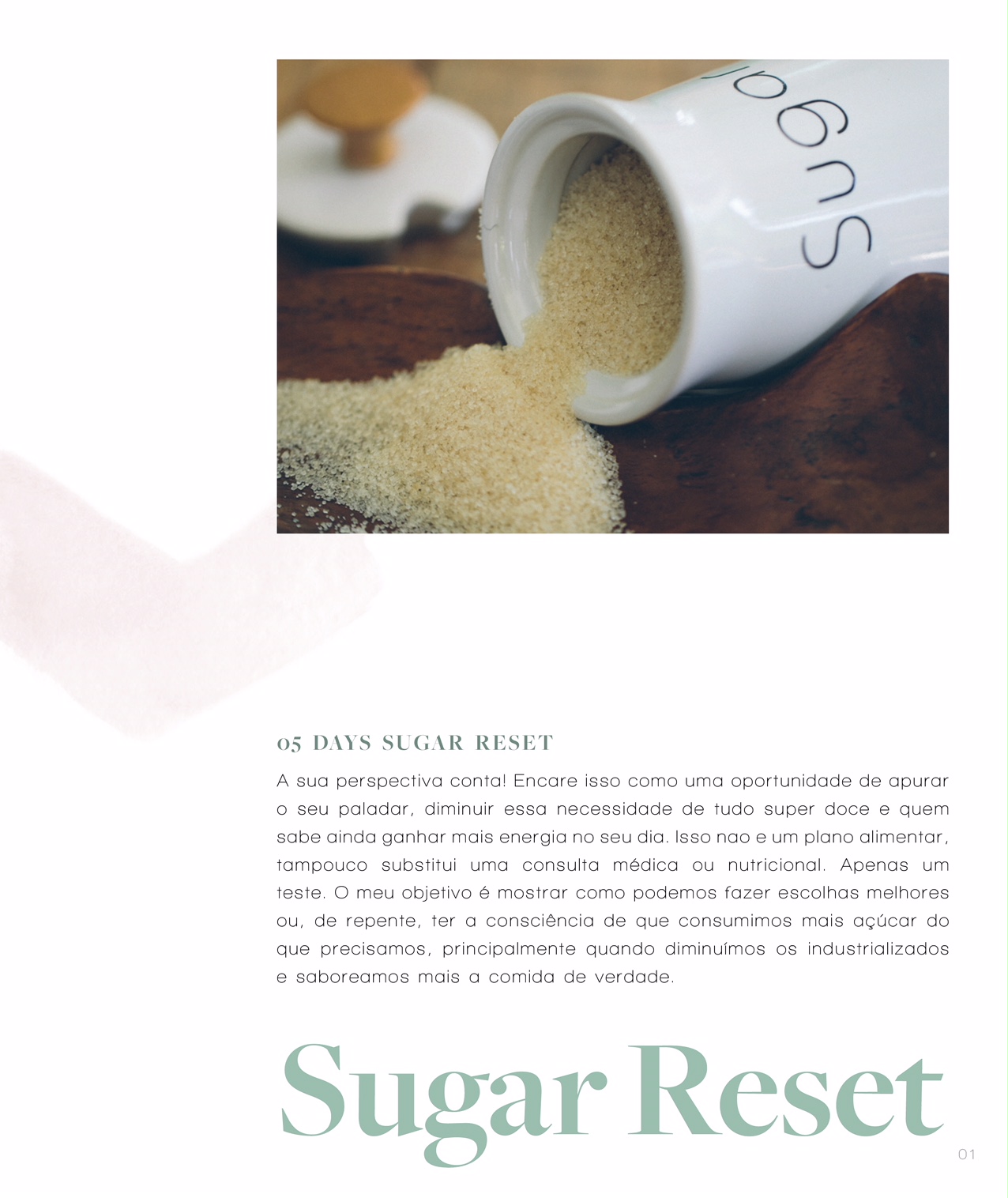
I don’t think liking candy is a problem, much less eating at special times or without excess. I particularly love a sweetie and if you look at the blog, you won’t have any doubts about it! But reducing sugar consumption can be a matter of changing habits and the effects are usually worth it. It may feel more energy, improves sleep, less desire for sweets, digestive improvement and a much more refined palate!
According to the recommendations of the WHO (World Health Organization) we should not consume more than 6 teaspoons of sugar a day. The American Cardiology Association stipulates for men a maximum of 9 teaspoons (36g) of sugar per day and up to 6 teaspoons (24g) of sugar per day for women.
To see the experience with this reset, what are the effects of sugar on our health and why we tend to become so addicted to this ingredient, Jump to this paragraph.
About reset:
- There is no right or wrong, much less succeed or fail. The important thing is to focus on what you discovered in this process. Ex: new recipes, difference in taste, improvement in sleep, became more attentive in the list of ingredients of processed foods, discovered that you can find other forms of pleasure in food other than sugary things, and the list goes….
- You can do it for 03 days, 05, 07 or 10 days.
- This is not an individualized eating plan, it does not replace a nutritional or medical consultation. I just suggested some recipes, hope it helps with the ideas!
- Miracles don’t exist, okay? Habits are built over time.
- Don’t get stressed with what foods to pick up or include. Just think that we will remove added sugars or sweeteners, period. Real and whole foods such as vegetables, oilseeds, fruits, roots, grains, seeds, meats and etc stay!
- Remember to stay hydrated (minimum 8 glasses of water a day) and include many colorful vegetables in all your meals, even snacks.
I will start on December 4th with those who are excited! To see your creativity, use #femellosugarreset or tag me in the photos.


Recipes I made:



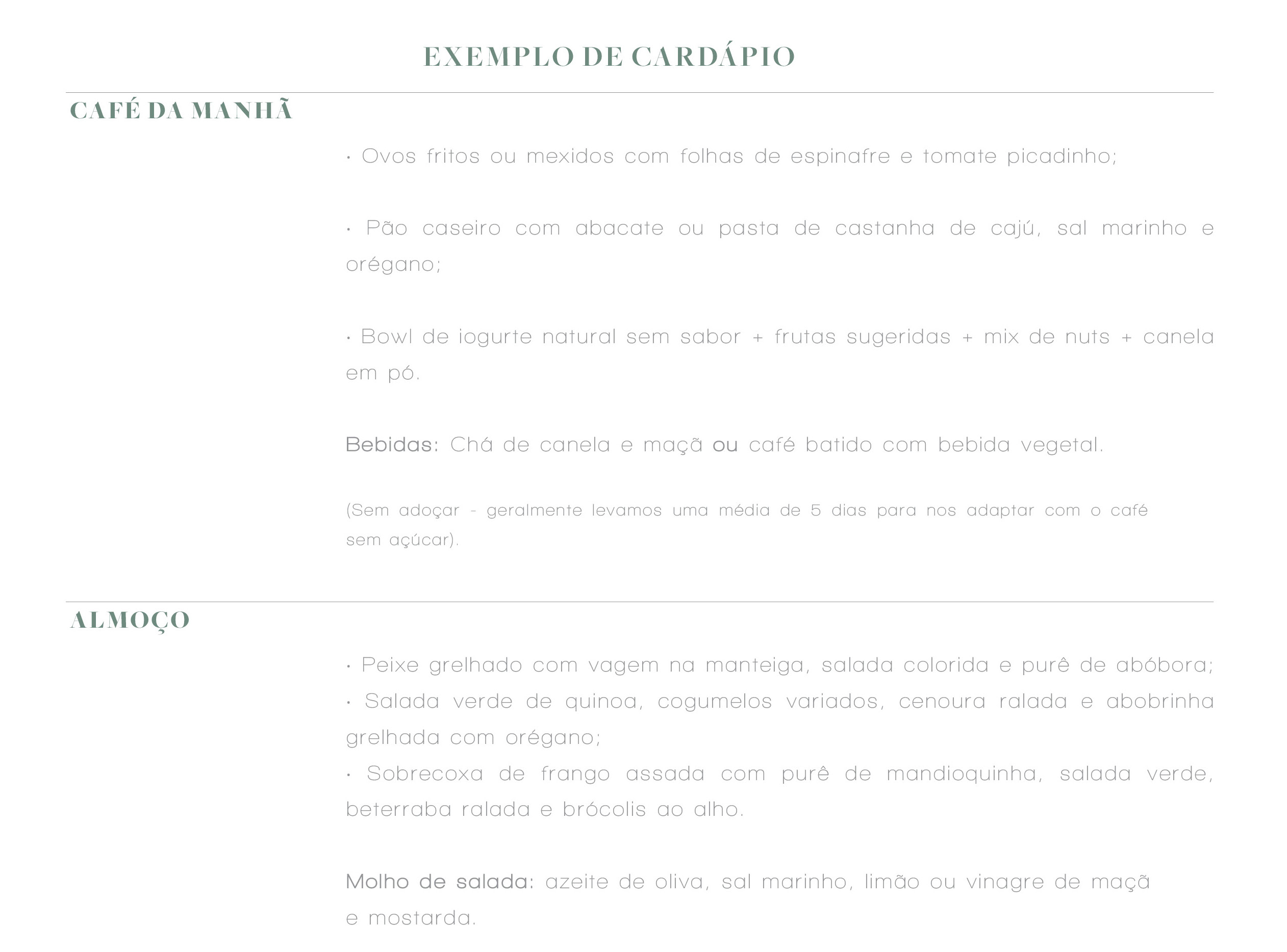


Breakfast:
dinner:
Curry cashew nut soup – I made it without the honey
zucchini spaghetti to pesto with tofu or poultry meatballs
snacks:
Goat and strawberry yogurt smoothie
For those who live in the US, see the names of sugars that we will avoid:
sucrose, maltose, dextrose,
Artificial Sweeteners: Aspartame, Cyclamate, Saccharine, Acesulfame Potassium.
My experience:
- First 03 days: I’ve never thought so much about my dark chocolate and I felt tired, with more desire for sweets. I asked if it was really worth doing. I was a little angry, but I knew it was a consequence of the lack of sugar, even though I didn’t consume it in large quantities.
- I went to Hot Yoga more often and it helped me a lot to reduce stress (read item 1)
- I drank plenty of water and teas to ensure that I wouldn’t be confusing hunger with thirst.
- At will for sweet: I made a green apple grilled in coconut oil with cinnamon and a little almond paste in the late afternoon, which made me very satisfied in the first few days.
- After 03 days I started to have much less desire for sweet snacks and have more desire for salty or bitter things naturally.
- I felt that including less salt or avoiding very salty preparations avoided that sweet rebound after the meal. I opted for many bitter vegetables combined with sweeter vegetables like dark green leaves, fermented vegetables, raw carrots, roasted pumpkin with cinnamon and grated beet.
- At the end of the 05 days I understood that all that initial questioning was part of the change in taste and habits, which can always be a little challenging. I saw how much I was conditioned to opt for sweets, even though they were healthy options! I felt my digestion much better and my palate much more refined.
- Conclusion: my dark chocolate that used to be 70% cocoa, now gave space for an even more bitter one. I discovered new recipes, explored bitter fruits that I didn’t consume much before and my coffee managed to remove even the stevia I’ve always used.
- A lot of restriction can lead to a lot of frustration, especially if our perspective is stuck with what should be avoided, instead of the wide variety of foods that we have free of sugar. That is, be creative and prepare your meals to have affordable options.
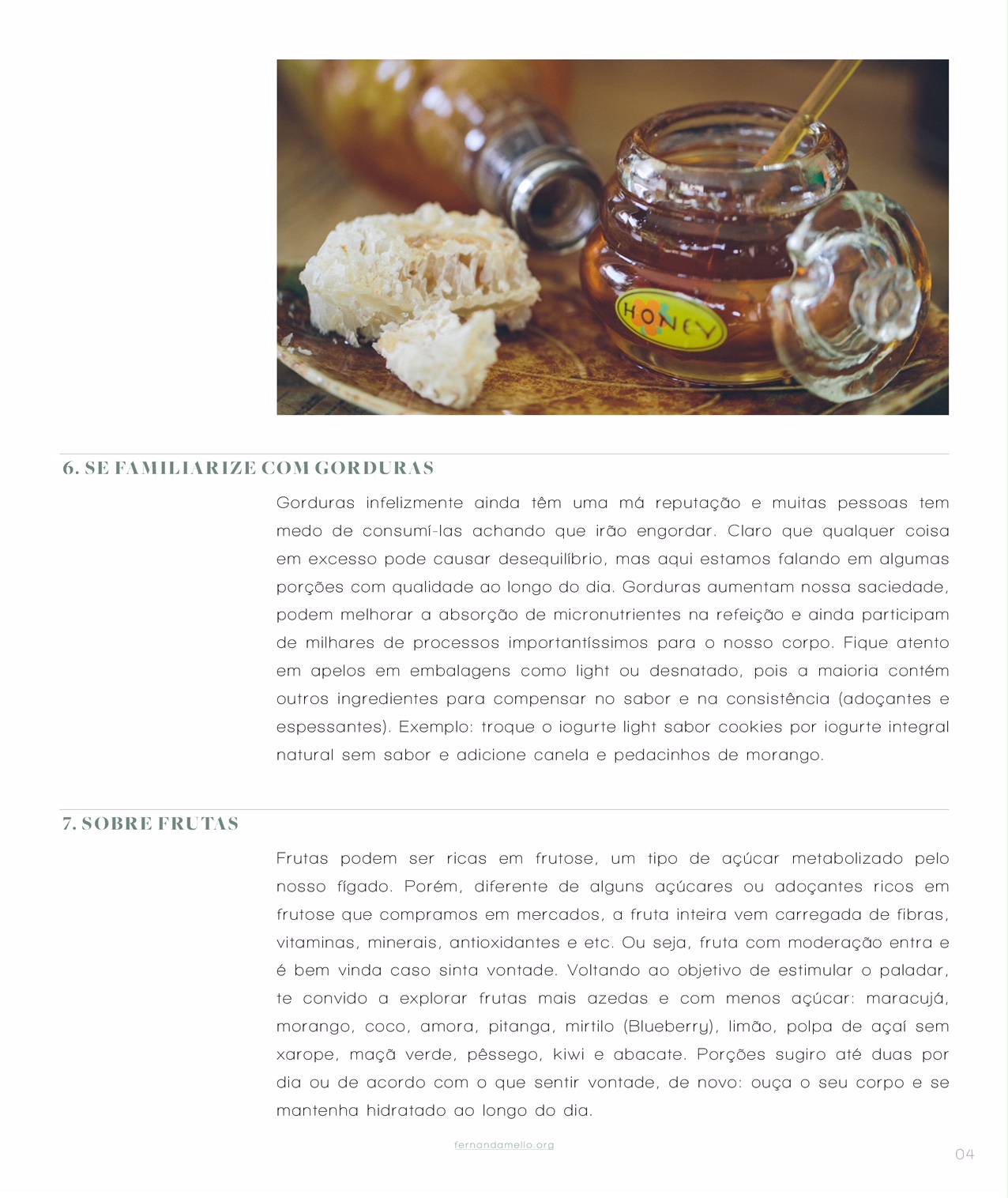
- Healthy options that I also took from my reset, such as raw honey, coconut sugar, coconut nectar and stevia will continue in my routine when I feel like making some sweet recipe, but it was amazing how I felt less need after these days.
Why minimize sugar?
People are becoming more and more aware of the impacts on our health from excessive sugar consumption.. Not everyone knows, but sugar has a much greater addictive power than cocaine itself (4 times more), but the solution is not only to take the sugar, but to include it in food and daily habits so that this withdrawal of sugar is something sustainable and no longer a problem..
We are increasingly busy with work and often stressed, in this scenario, we end up increasingly looking for a feeling of comfort in food. And we usually choose options rich in refined carbohydrates (sweets, breads, cakes, pasta, etc.). Comfort at first really exists, but if this becomes something constant, there are great chances of evolving into an addiction, which can take you away from your best version. Knowing that we often seek these sweets according to our stress, I reinforce the importance of including stress relief and self-care practices.
Just a few words about “detox” schemes. Our body is super capable of renewing itself and eliminate what doesn’t serve na-tu-ral-men-te! Our liver, like other organs, does a great job of it. That is, yes, your body detoxifies itself and naturally. This reset has a different purpose and is not a detox. Unlike the natural sugar we find in fruits and vegetables, the added sugar in preparations can over time and excess cause numerous imbalances in our health, especially when we are not aware that they exist.
blood glucose x insulin
Blood glucose (glucose/sugar in the blood) is formed as a result of the breakdown of carbohydrates in our digestion. When the blood glucose rises, the pancreas then releases the insulin hormone to carry this glucose from the blood into the cells. In an ideal scenario, we don’t want the blood either with a lot of glucose or with little. So, depending on our consumption of sugar and/or foods rich in refined carbohydrates, we will have more blood glucose and, as a natural consequence, more insulin being released to maintain this balance in the blood of glucose. This work that the pancreas does to constantly release insulin can trigger some changes both in the production of insulin and in the uptake of glucose into the cells. which can trigger a metabolic imbalance and difficulty maintaining a weight that is healthy.
sugar x serotonin x intestinal flora
We easily get addicted to sugar or foods rich in sugars (refined carbohydrates, alcoholic beverages and non-alcoholic drinks rich in sugar) because they increase the production of serotonin, a neurotransmitter that causes a feeling of well-being that we love so much. However, did you know that our body produces these neurotransmitters naturally? And do you know which system of our body has a large part in this production? The intestinal flora! Yes, the thousands of living bacteria that exist in our digestive system. However, there are “good” bacteria and “evil” bacteria. If we have an imbalance with a greater predominance of “evil” bacteria, we will naturally produce less serotonin. But what increases the growth of bad bacteria? – Sugar, foods we have food intolerance and stress.
Excessive consumption of sugar is not necessarily linked only to weight gain, it can also increase the chances of an imbalance in its intestinal flora, with greater proliferation of gram-negative bacteria, which use sugar as the main fuel to grow. In addition to increasing inflammation and allergic processes, causing malabsorption of nutrients, increasing the chance of candida development and possible hormonal dysfunctions (insulin resistance, diabetes, thyroid problems due to lack of nutrients, hepatic overload, etc.).
The positive cycle is repeated when we reduce the sugar and at the same time we increase fibers of natural origin, such as vegetables, vegetables and in natura and poorly processed foods. Fibers are a key piece and, as opposed to sugar, increase the proliferation of good bacteria! As I said earlier, with a greater concentration of good bacteria, our natural production of serotonin becomes more effective, which can consequently decrease that desire for sweet constant.
REFERENCES:
- The Obesity Epidemic and Food Addition: Clinical Similarities to Drug Dependance
- Mood, Food, and Obesity
- a review of recent evidence reporting to sugars, insulin resistance and diabetes
- Effect of diets low and high in refined sugars on gut transit, bile acid metabolism, and bacterial fermentation.
- Regional differences in nutrient-induced secretion of gut serotonin