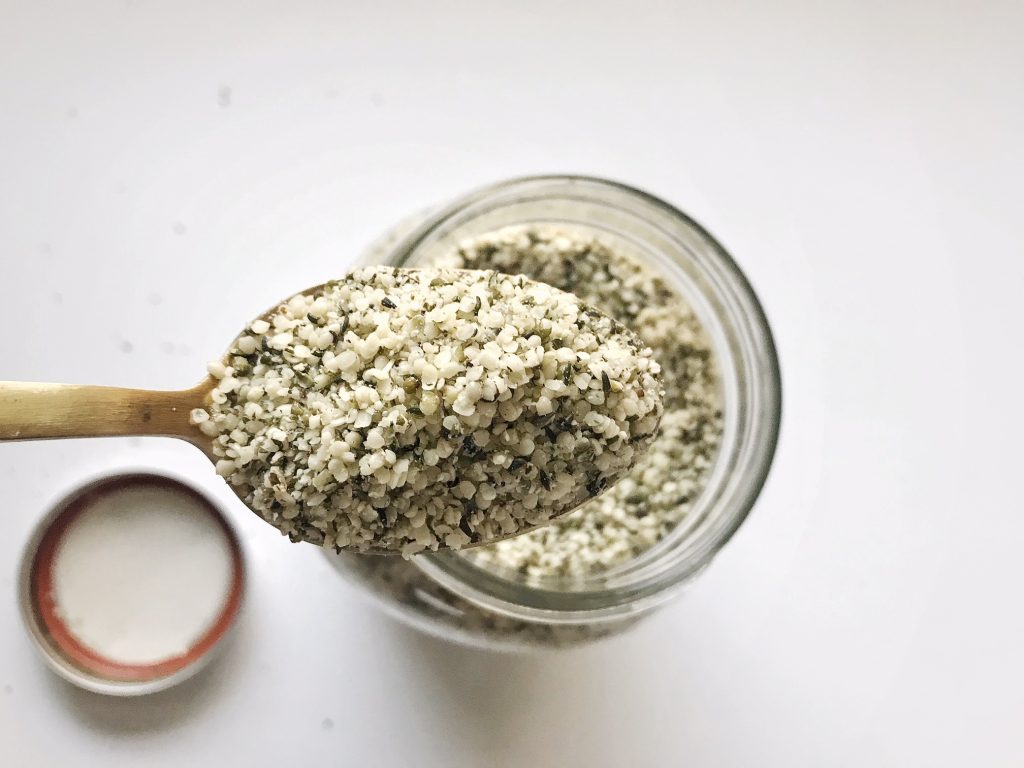
These little seeds are part of my daily life and is one of my favorite toppings for smoothies and soups. In this post we are going to talk a little more about the characteristics of Hemp Seeds, their proven benefits for our health, where to find them, options on how to include them in our food routine and the best way to store them.
Also known as hemp seed, it is considered a super food due to its nutritional profile. Despite being derived from the same herb (cannabis sativa) that produces a type of psychoactive drug, the seeds do not have THC (Tetrahydrocannabinol), which is the main substance of the drug. Due to its nutritional profile, I usually recommend it to my patients, especially those who follow a vegetarian and vegan diet because they are a great protein source. Seeds are a practical, quick and easy way to complement meals and make them richer nutritionally.
how to use
As the seeds are already ready for consumption, they become a super practical and quick way to add nutrients to the preparations!
Recipes: I really enjoy using the seeds as a topping for my smoothies or soups! Another interesting way to use them is to add to the bread recipe, granola bars, Cookies, or even making a pesto That goes super well with hamburgers and salads!
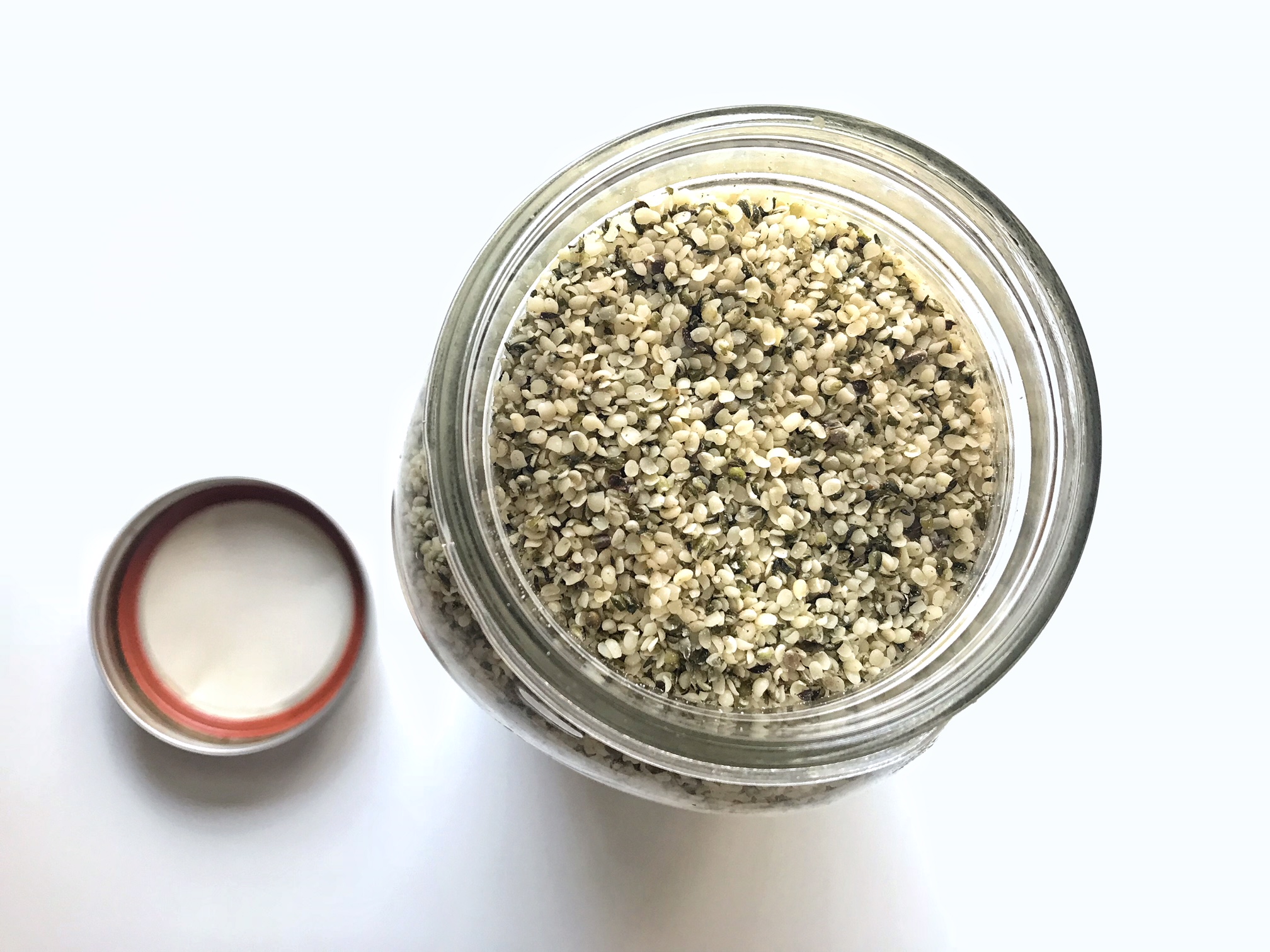
How to store: The best way to store the seeds is in a container of glass, thus avoiding contact with AR, with this its characteristics are maintained for longer. The glass must be stored in a dry place and without direct sunlight falling on it.
Where to buy: Unfortunately, the seeds are not yet commercialized in Brazil. Those who live in the United States or Canada can find them in health food stores and supermarkets.
Benefits of Hemp Seeds
Despite the size, the hemp seeds They have a fantastic nutritional profile! Analyzing its composition, we realize that 30% of its calories are derived from good fats, about 25% of its calories are derived from protein, and is also a source of vitamins and minerals, in addition to containing a significant amount of fiber in its composition. Although our bodies are able to digest fibers, they play a fundamental role in the proper functioning of our digestive system, in addition to bringing a feeling of satiety.
Analyzing the quality and type of fat that are present in the seeds, it is observed that about 80% are polyunsaturated fat, which are exceptionally rich in two essential fatty acids: linoleic acid (omega-6) and acid alpha-linolenic (omega-3). A study has proven that this combination of fatty acids, if used in the form of oil, can be a great ally to combat signs of atopic dermatitis (skin problems).
Regarding their protein profile, the main proteins present in the seeds are: edestin and albumin, which are easily digested and contain significant nutritional amounts of all the essential amino acids we need to meet our demand. Hemp seeds along with quinoa are the only vegetables that have this characteristic. Therefore, they become an ideal alternative for vegetarians and people who are allergic to soy, gluten intolerance and dairy products.
Nutritional Value – 30 grams
- 174 kcal
- Total fats: 13.5g; Saturated: 1g; Trans: 0g
- Protein: 11g
- Total carbohydrates: 2g; fibers: 1g
Minerals
- Iron 2.9 mg 16% VD
- magnesium 192 mg 48% VD
- Zinc 3.5 mg 6% VD
Source here.
hemp seed

These little seeds are part of my daily life and it is one of my favorite toppings for smoothies and soups. In this post well talk about the characteristics of this nutrient-dense seed, the benefits for our health, where to find it, how to include it in our eating routine, and the best way to store it.
Hemp seeds are considered a superfood because of its nutritional profile. Thoughts Derived from the Same Herb (Cannabis Sativa) That Produces A Type Of Psychoactive Drug, These Seeds Do Not Have THC (Tetrahydrocannabinol), which is the drugs main substance. i Often recommends the consumption of hemp seeds to my clients, especially for those who follow a vegetarian or vegan diet (understand why further on). Hemp seeds are a great way to add nutrients into our meals, especially omegas and amino acids.
Benefits of Hemp Seed
technically a nut, hemp seed Typically Contains over 30% Oil (Good Fat) and about 25% Protein, with considerable assets of Dietary Fiber, Vitamins and Minerals. Hempseed Oil is over 80% in Polyunsaturated Fatty Acids, and They Are Exceptionally Rich in Two Essential Fatty Acids: Linoleic Acid (Omega-6) and Alpha-linolenic acid (Omega-3). The two main proteins present in hempseed are edestin and albumin. both of these high-quality storage proteins are easily digested and contain nutritionally significant amounts of all essential amino acids we need to supply our needs. In addition, hemp seed have exceptionally high levels of the amino acid arginine. evidence also indicated that dietary hempseed oil might be useful in treating symptoms of Atopic Dermatitis.
Nutritional Value Per 30 Grams
- 174 kcal
- Total FAT: 13.5g; Saturated: 1g; Trans: 0g
- Protein: 11g
- Total Carbohydrate: 2g; Fiber: 1g
minerals
- Iron 2.9 mg 16% dv
- magnesium 192 mg 48% dv
- Zinc 3.5 mg 6% dv
extras
how to use it: Works great as a topping to smoothies or soups. You can also add it on salads to give an extra crunchiness. I add the hemp seeds in many of my reccipes, just click in the word to get the full recipe: granola bars, Cookies and pesto sauce!
how to store it: Store The Hemp Seeds in a Cool Dry Place Away From Direct Sunlight and to Maintain The Nutrients and Against The Seeds to Oxidize Keep It in Sealed glass jar.
where to find: Grocery Stores and Health Stores.